Minnesota pet stores
There are two types of pet stores in Minnesota:
1) Pet stores who do not buy and sell dogs and cats and have instead chosen to use their facilities to assist local rescue groups with pet adoptions. This type of business markets to responsible pet owners and, ultimately, helps to lower euthanasia rates by placing focus on unwanted animals within foster homes and local shelters.
2) Pet stores who buy puppies and kittens from animal breeders or brokers and sell directly to unsuspecting consumers.
Pet stores and commercial breeders
Pet stores typically buy from high-volume commercial breeders and dealers. Because these breeders/dealers are selling wholesale and often ship animals across state lines, they must be licensed by the United States Department of Agriculture (USDA).
A 2010 audit of USDA inspections by the Office of Inspector General offers a scathing assessment of USDA inspection and enforcement practices, indicating animal cruelty and suffering at USDA-licensed breeding kennels. In 2021 and 2024 the ASPCA filed a lawsuits against the USDA for not enforcing the Animal Welfare Act (i.e., citing violations), and instead choosing to educate licensees.
Some pet stores announce they only buy from "USDA-licensed facilities" — implying that the federal license guarantees the conditions and animals are healthy.
Some pet stores also claim they do not buy from puppy mills; and some state that they support the kennels they work with — even if the size of the kennel has 100, 500 or over 1,000 dogs and puppies.
No responsible breeder sells puppies or kittens through pet stores, or online.
Responsible breeders and rescue groups interview the buyer first to make sure the animal and buyer are the "right fit," and the buyer can properly care for the dog or cat. Responsible breeders allow people into their home or kennel so as to see the breeding conditions and meet the dam (mother) and sire (father); they also own and breed fewer animals so as to have enough time to properly care and socialize each dog or cat.
In addition to assessing the facility conditions, veterinary care, and staff qualifications, kennel size (number of animals) can dictate the care and well-being of each animal.
The vast majority of pet stores in Minnesota and throughout the nation have chosen to stop buying puppies from mass commercial breeders and, instead, have embraced the new humane pet store model that works to protect dogs, cats, puppies and kittens.
Documentation of animal purchases can be found on Certificates of Veterinary Inspection (CVIs) and consumer purachse agreements. CVIs are required for shipping animals across state lines; these CVIs document acquisitions. (NOTE: The MN Board of Animal Health now denies data requests for CVIs, prohibiting the public from knowing where the pet originated.) Purchase agreements from consumers are only available if the consumer is known and provides a copy of the agreement.
Some pet stores claim that Minnesota law prohibits them from providing a list of their breeders to consumers, law enforcement, or others. This is incorrect; there is no law in Minnesota that prohibits pet stores from doing so.
• Four Paws and A Tail (Blaine, MN)
One pet store in Minnesota that still sells dogs is Four Paws and A Tail, located in Blaine, MN. It is reported that Four Paws and A Tail has, for decades, obtained puppies from multiple large-scale commercial dog breeders.
NOTE: This pet store is under new ownership as of 2022. Purchases of puppies with the new owner have been sourced to multiple breeders in Hillsboro, Wisconsin, a large broker in Iowa, and a breeder in Winona County. There may be other suppliers as well.
Prior data of breeders used with former owner, Kristen Smith:
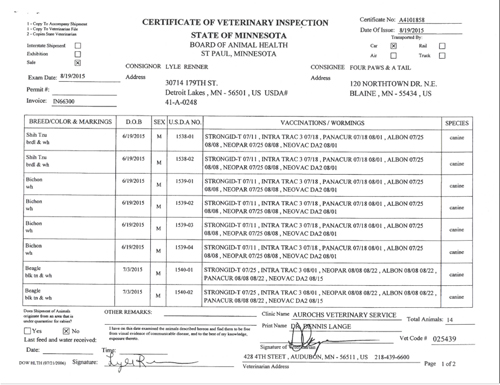
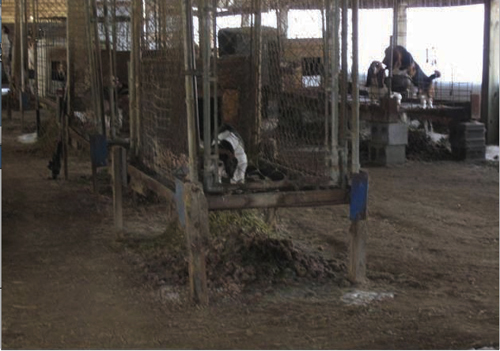
One breeder was Lyle Renner, (formerly operating as Renner's Kennel in Detroit Lakes with father John, now deceased). He has cancelled his USDA federal license, so is no longer selling to pet stores. According to the USDA inspection report dated November 15, 2016, this breeder had 134 adult dogs and 46 puppies. (Photo below is of this breeder's kennel; by USDA.) Below is a CVI and photo from this kennel from a USDA inspection report (2011). Renner's Kennel cancelled its USDA license in 2018 and now is operating as Bluewater Creek Kennel (owner, Lyle Renner); November 2019 USDA inspection report showed 115 adult dogs and 23 puppies.
Two stores in Minnesota below now closed.
• Petland (St. Paul, MN)
Petland (in St. Paul, MN), when operating, also purchased dogs from large-scale commercial breeders and dealers in Minnesota and Iowa. First example, below shows a shipment to Petland from Menning Enterprises, a Minnesota "Class B" breeder and dealer located in Pipestone County who, according to the USDA inspection report dated February 23, 2016, had 595 adult dogs and 372 puppies. In July 2019, USDA inspection reports showed 264 adult dogs and 423 puppies.
NOTE: Menning Enerprises is now named Rockview Kennels.
The second CVI is for a shipment to Petland from Heritage Puppies, an Iowa "Class B" dealer who, according to the USDA inspection report dated January 27, 2016, had 497 adult dogs and 93 puppies.
The third example is from Fulton Enterprises located in Freeborn County who is licensed as a "Class B" dealer; this dealer buys from breeders and re-sales to pet stores.
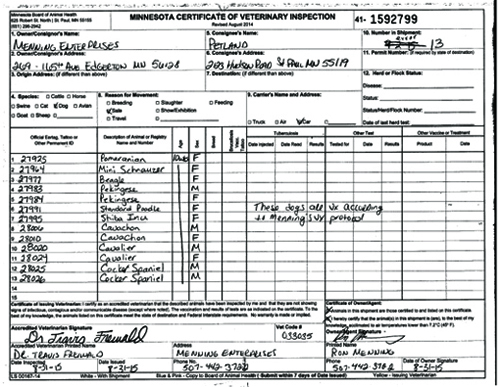
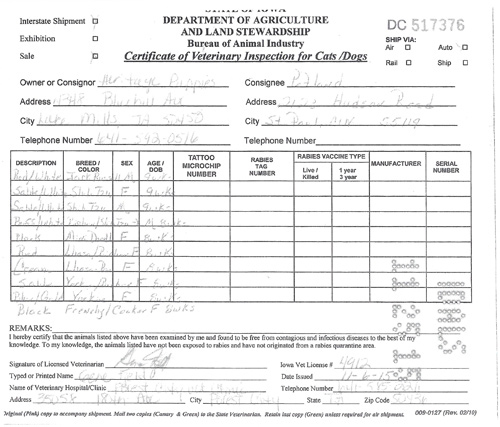
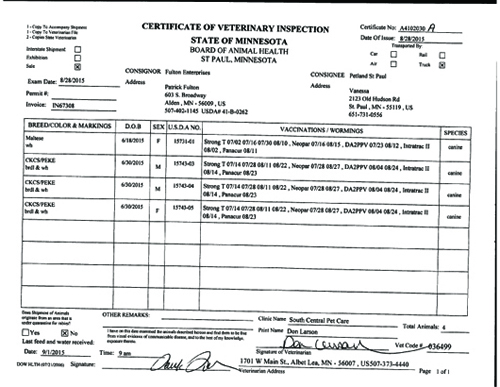
• Har Mar Pet Store (Roseville, MN)
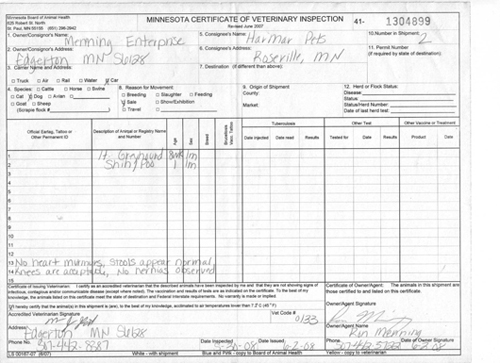
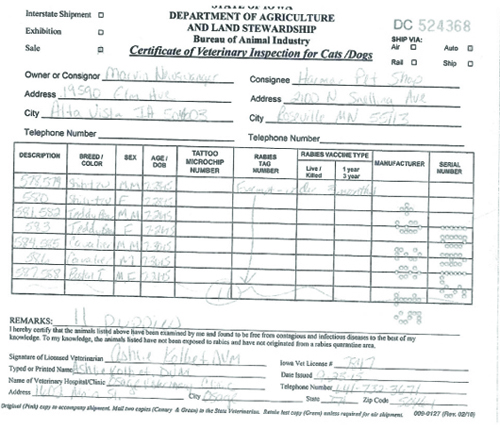
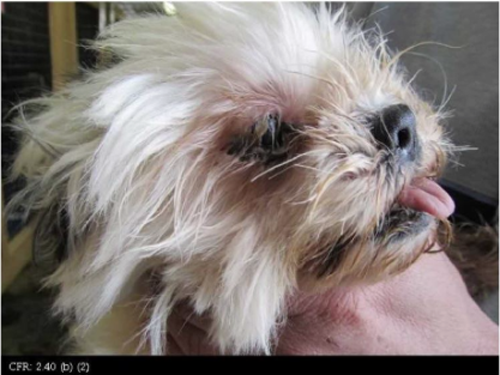
Animal Folks linked Har Mar Pet Store to large-scale commercial breeders in Minnesota and Iowa. First CVI below shows shipments from Menning Enterprises, located in Pipestone County, to Har Mar Pet Store. (See animal counts listed above for this dealer.) Because MN law does not require CVIs for intrastate shipments (i.e., shipments within Minnesota, not across borders), documents filed are not consistent or recent. The CVI below is from 2008. The second CVI is for a shipment to Har Mar Pet Store from "Class A" breeder Marvin Newswanger, operating as Maple Tree Kennels. According to the USDA inspection report dated October 20, 2015, ths breeder had 331 adult breeding dogs and 219 puppies. An attempted inspection was made in 2016, but the USDA was unable to access the premises. Being unavailable for an annual inspection is considered a violation of the Animal Welfare Act. Photo is example of dog from Iowa breeder Eugene Martin who also sells to the Har Mar Pet Store; taken 2014 by USDA during inspection to show dog with right eye matted shut with yellow-green discharge.
Consumers are misled
Some pet store employees mislead consumers about where and how the animal is bred. In some cases, the store employees may claim the puppies or kittens are bred by smaller, local breeders or within homes — rather than through large-volume breeders and dealers who may house over 300, 600 or 1,000 dogs. Some employees may just say "breeder" and not provide additional information.
Even if the name of a breeder or dealer is given, often it is difficult for the consumer to trace down this breeder/dealer and gain access to their facility to evaluate conditions.
Health guarantees may be offered by the store but often consumers do not want to treat their new companion as a faulty product to be exchanged. These guarantees also do not reflect the stressful "sales journey" of the animal — i.e. from breeding kennel to transport (i.e. in truck or plane) to dealer facility to transport again to weeks or months caged at pet store prior to being sold.
Additional data on pet stores and consumer problems:
• Challenging the Sale of Puppy Mill Dogs - Class Action Lawsuit against Barkworks
Buy wisely
Pet stores that choose to sell dogs and cats contribute to the "cycle of maltreatment "described above, as do the consumers who buy from these pet stores.
Pet stores that have chosen not to sell dogs and cats and to instead support local rescue groups through pet adoptions deserve our consumer dollars.