


|
|
 |
| issue
|
issue > pet stores > overview
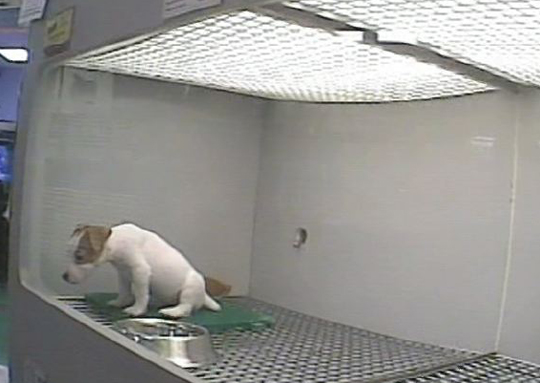
An outdated business model Selling puppies and kittens (acquired from commercial breeders) through pet stores is an outdated business model. By regularly placing orders for puppies and kittens and providing a convenient location for consumers to touch and see the animals, these stores are part of the distribution cycle that allows for the mass production of puppies and kittens. These pet stores are the face of the breeding industry.
The breeder-pet store pipeline Selling puppies and kittens for profit is a commercial enterprise. Puppies and kittens are viewed as "products;" acquired from breeders, transported to stores, then displayed and sold to consumers with a "marked up" retail price. (Often consumers may not be aware of where the puppy and kitten were born or the conditions of the kennel.) For these type of pet stores, puppies and kittens represent a significant portion of their inventory and sales. They continue selling animals because it's profitable to do so. Other pet stores are now challenging this old business model — for ethical and financial reasons. Reputable stores are "going humane" by no longer purchasing dogs or cats from breeders and instead focus on selling pet supplies and promoting responsible pet ownership by holding "pet adoption" days, where local rescue groups are allowed within the store for a day or weekend to meet customers and "adopt out" dogs and cats. NOTE: Whether a store is profitable by selling dogs and cats may be directly related to how a store chooses to handle sickly animals. Do they examine each animal prior to selling? Does the store medically treat each sick puppy and kitten? Do they reimburse the consumer for veterinary expenses (beyond the purchase price)? Or do they ship sickly animals back to the breeder to be killed? Angel Duratti, owner of Angel's Pet World in Hudson, Wisconsin, used to buy puppies from a breeder/broker in southern Minnesota. In 2010, she stopped buying puppies from this kennel and switched to a humane pet store model — due to the health concerns of the animals and what she learned about these kennels. "The switch was about doing the right thing," explains Angel. "So many of the puppies we bought from this breeder had health problems, such as kennel cough, giardia, coccidia, roundworms, pneumonia, skin issues, ear issues, patellas, parvo and more. The last litter I bought from him (10 puppies) each had brucellosis. The veterinary bills to treat the animals was expensive. And we would also reimburse consumers for their vet bills — which we didn't need to do legally, but I wanted to. We didn't want to deceive customers. Puppy sales alone made up about 22% of our sales. But the vet expenses exceeded that amount. So buying these puppies was not profitable for us — because we spent the money on their vet care. Once we switched to working with rescue groups and holding adoption days, everything changed. We're very successful now. People heard we went humane and our customer base grew. The reward is so much greater."
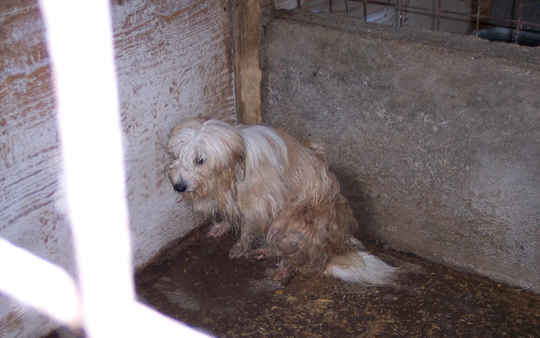
The puppies It's been said that the "puppies are the lucky ones" because they eventually get to leave the breeding kennels — they're sold to consumers directly or to pet stores for resale. (Though, as explained above, the puppies, too, may be sickly, incurring considerable cost to store owners — and to consumers if sold without being treated.) Consumers see the cute puppy or kitten in the store and may not be aware of the adult breeding animals left behind in the kennels. Adult breeding dogs and cats are caged and confined for up to 6, 8, 10 years or more — depending on how long they are needed for breeding. Consumers never see the condition of the adult breeding dogs and cats; these adult animals are not sold to pet stores for resale. (Photo above of adult dog is from Minnesota breeder.) Some breeders kill the adult dogs and cats when they can no longer breed and are no longer profitable (psychologically and physically damaged, these animals are not "considered" pets); some sell the adult animals at auctions to receive a "salvageable value" for the investment made in the animal (similar to livestock); and some give away their adult dogs or cats for free or at a discounted price to rescue groups and consumers (freeing them up financially so they don't have to pay for the up-keep of an older animal). Rescued adult dogs require extensive rehabilitation. Having been confined for years with no or limited exercise, socialization and human contact results in severe physical and mental/behavioral conditions. Best Friends has created a toolkit (link below) with tips on how to rehabilitate a rescued dog: Most industries do not require a second industry to rescue and rehabilitate their "product," yet hundreds of rescue groups and humane societies throughout Minnesota with thousands of volunteers rescue, care for, foster and adopt harmed or sickly dogs and cats — without any financial compensation from breeders or pet store.
Online pet sales Due to the Internet, the marketplace has changed dramatically. The brick-and-mortar "pet store" has expanded to online sales. Some pet stores don't have storefronts and rely solely on website traffic and shipping animals directly to the consumer. Some consumers buy puppies and kittens online as a way to save money, unaware of the breeding conditions and the potential costs (financial and emotional) if the animal is unhealthy.
Federal regulation Dog and cat breeders who sell wholesale (i.e., to pet stores) are regulated by the federal government under the Animal Welfare Act (AWA) by the United States Department of Agriculture (USDA). The USDA recently did a rule change that changed the definition of "retail pet store" within the Animal Welfare Act. Learn more: AWA Licensing Typically, pet stores are not regulated by the USDA; however, if the store sells certain wild or exotic animals, then the store must obtain a federal license under the Animal Welfare Act. As an example, a pet store in the Har Mar Mall in Roseville, MN (Har Mar Pet Store) chose to sell hedgehogs, so it met the definition for a federal license. The store owner was cited for numerous violations by the USDA in 2016; the owner then chose to stop selling exotic animals and cancelled his license.
|
 |
"));